
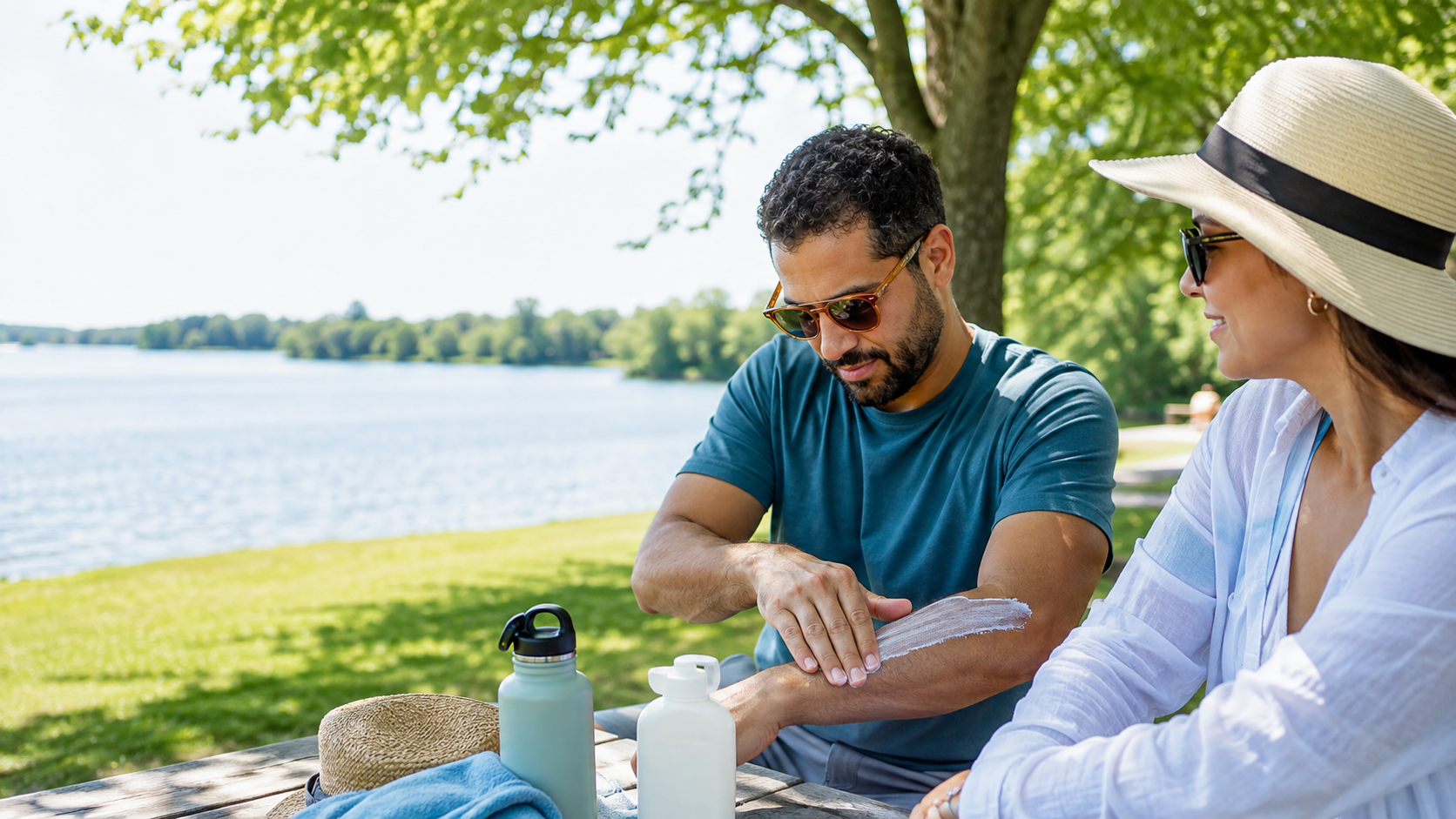
Ultraviolet radiation can cause sunburn, accelerate skin aging and increase the risk of skin cancer. When used correctly, sunscreen is an effective form of protection, but it should be combined with shade, protective clothing and sensible sun habits.
How should you choose a sunscreen?
- Choose a broad-spectrum product that protects against UVA and UVB rays, with a sun protection factor (SPF) of 30 or higher.
- For swimming, sports or heavy sweating, select a product labelled “water resistant” or “sport.” No sunscreen is completely waterproof.
- In Canada, look for a DIN or NPN on the label. Approved chemical filters and mineral filters, such as zinc oxide and titanium dioxide, can both provide effective protection when applied correctly.
Use it correctly
- Apply a generous, even layer to all uncovered skin about 15 minutes before going outdoors. Remember the ears, neck, tops of the feet, backs of the hands and lips.
- Reapply at least every two hours and after swimming, heavy sweating or towel drying.
- Check the expiry date and do not leave sunscreen in a hot car or in direct sunlight, since excessive heat may reduce its effectiveness.
Are sunscreens safe?
- Health Canada states that sunscreen side effects are rare. Some people may nevertheless react to a UV filter, fragrance or preservative.
- If you have sensitive skin, consider a fragrance-free product, test it on a small area for 48 hours or ask a healthcare professional for advice. Mineral products may be better tolerated by some people but are not automatically superior for everyone.
- For babies younger than six months, prioritize shade and protective clothing and ask a healthcare professional before applying sunscreen.
Sunscreen is only one part of protection
- Seek shade, especially when UV radiation is strongest, and wear a wide-brimmed hat, protective clothing and sunglasses.
- A high SPF does not make unlimited sun exposure safe. No sunscreen blocks 100% of ultraviolet radiation.
At Bina Clinic, we recommend sun protection tailored to your skin, activities and medical history. Consult a healthcare professional about any skin lesion that changes, bleeds, does not heal or causes concern.
Official sources
This article provides general information and does not replace a personalized medical assessment, diagnosis or treatment.