
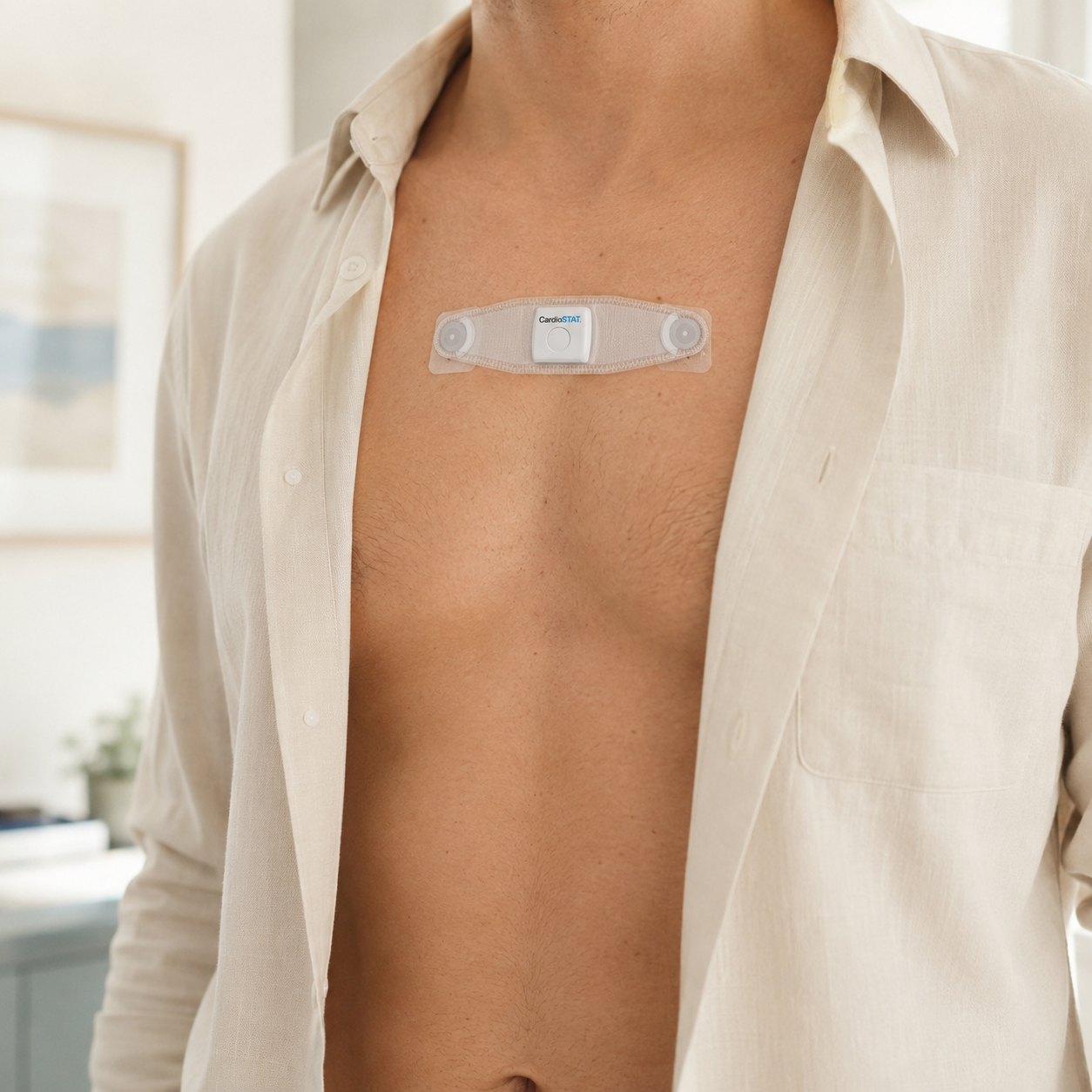
CardioSTAT is a wearable recorder that continuously collects information about the heart's electrical activity. Unlike a resting ECG, which records a brief period at the clinic, Holter-type monitoring records over a longer period while you go about your day and sleep.
Your physician may request monitoring to investigate an intermittent rhythm concern or follow an established condition. A longer recording provides more time to collect information, but no recording period guarantees that a particular event will occur or be captured.
Choose this service when a physician has prescribed ambulatory heart-rhythm monitoring. Reasons may include an assessment of palpitations, an irregular pulse, intermittent dizziness or a suspected rhythm disturbance, or monitoring an existing heart-rhythm condition.
The physician selects the test and duration in the context of your health. If your prescription says “Holter” without specifying CardioSTAT or the duration, contact the clinic to confirm the request before booking.
This option records your heart's electrical activity over approximately two days. Choose it when your physician has prescribed 48-hour CardioSTAT monitoring.
The service includes review of the prescription, installation of the recorder, wearing and device-care instructions, the 48-hour recording, return or mailing instructions, analysis and cardiologist interpretation, and transmission of the report to the referring physician.
This appointment is for patients with a valid prescription for approximately two days of monitoring. Your physician considers the reason for testing and the information needed when selecting the duration.
If your request specifies seven days or another period, contact the clinic or select the matching service rather than substituting the 48-hour option.
This option records your heart's electrical activity over seven days. Your physician may choose a longer recording when more time is needed to assess an intermittent concern.
The published service includes instructions for daily wear and device care, seven days of continuous recording, return or mailing instructions, analysis, cardiologist interpretation and transmission of the report to the referring physician.
Choose this option when a physician has prescribed seven-day CardioSTAT monitoring. A longer recording does not guarantee a diagnosis or make it the right option for everyone.
If you have a request for 14 days, contact the clinic before booking. The listed 14-day fee is $549; confirm that option's availability and arrangements rather than booking a seven-day test in its place.
After you return the recorder according to the instructions, the completed recording is processed and interpreted by a cardiologist. A report is sent to the referring physician.
The cardiologist's interpretation of the recording and a consultation to discuss your care are different parts of the pathway. Your referring physician considers the report alongside your symptoms, history and reason for testing, then explains the findings and any next steps.
This information applies to patients having prescribed CardioSTAT monitoring, whether the requesting physician practises at Bina or elsewhere.
If another doctor ordered the test, that doctor can remain responsible for your follow-up. If you want a Bina physician to assess your concern or review the report, contact the clinic to arrange the appropriate separate consultation.
.png)