
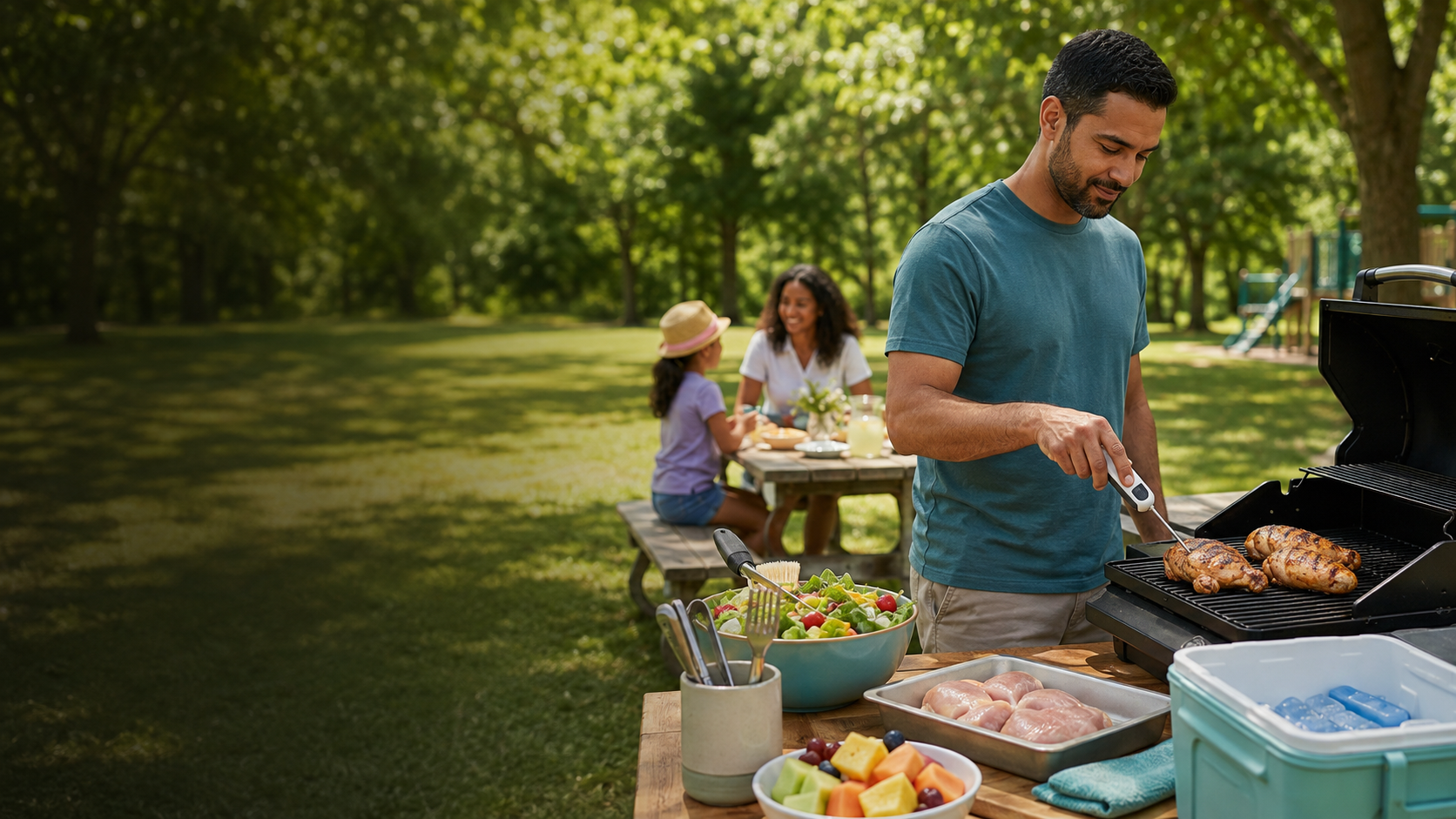
Outdoor meals are one of summer’s pleasures, but warm weather allows bacteria to multiply faster. A properly chilled cooler, strict separation of raw food and a digital food thermometer are the best tools for a safe barbecue or picnic.
Why is the risk higher in summer?
Bacteria grow quickly in the temperature danger zone between 4°C and 60°C. Outdoor heat, transportation and food left on a buffet therefore increase risk.
Meat, poultry, fish, eggs, dairy products, cooked rice or pasta, prepared salads and cut fruit must stay cold or hot until they are served.
Young children, pregnant people, older adults and people with weakened immune systems may develop more serious complications.
Before leaving: keep food cold
Pack perishable food in a cooler filled with ice packs. The temperature inside the cooler should remain at or below 4°C.
Keep the cooler in the shade and open it as little as possible. A separate drinks cooler helps food remain cold longer.
Seal raw meat, poultry and seafood in leakproof containers and place them at the bottom of the cooler so their juices cannot contaminate ready-to-eat food.
Marinate food in the refrigerator or cooler, never on the counter. Marinade that touched raw meat should not be used as a sauce unless it is first brought to a boil.
Clean and separate to prevent cross-contamination
Wash your hands with safe water and soap for at least 20 seconds before cooking, after touching raw meat and before serving food.
Use separate cutting boards, plates and utensils for raw food and for cooked or ready-to-eat food.
Never return cooked meat to the plate that held it raw unless the plate has been thoroughly washed.
Wash produce with safe drinking water before cutting it. When water access is limited, bring it already washed in a clean container.
Cook with a digital thermometer
Colour and smell cannot confirm that meat is safe. Insert the thermometer into the thickest part; for a burger, insert it through the side to the centre.
Useful minimum temperatures: ground beef, veal, lamb or pork 71°C; poultry pieces or ground poultry 74°C; whole poultry 82°C; fish 70°C; pork pieces 71°C; leftovers and hot dogs 74°C.
Wash the thermometer in warm, soapy water between readings and check several pieces when food may have cooked unevenly.
Serve and store promptly
Keep cold food at or below 4°C and hot food at or above 60°C. Serve small portions and replace them as needed instead of putting everything out at once.
On a hot summer day, do not leave perishable food at room temperature for more than one hour. As a general rule, discard cooked food left at room temperature for more than two hours.
Refrigerate leftovers promptly in shallow containers. Eat them within two or three days or freeze them.
Never taste food to decide whether it is safe. Harmful microbes do not always change the smell, taste or appearance. When in doubt, throw it out.
Recognizing food poisoning
Symptoms can include abdominal cramps, diarrhea, nausea, vomiting, fever and headache. They may begin within hours or several days after the meal.
Preventing dehydration is the priority. Take frequent small sips of fluid; an oral rehydration solution may help when diarrhea or vomiting is significant.
Do not prepare food for others while you are ill. Food handlers should be symptom-free for 48 hours before returning to work.
When should you get medical help?
Call Info-Santé 811 if you cannot keep fluids down, diarrhea is frequent or contains some blood, symptoms persist, or a person at higher risk becomes ill.
Seek prompt care for persistent fever, vomiting or diarrhea that has not improved after 48 hours, or a worsening overall condition.
Go to emergency for a large amount of blood or black stool, severe abdominal pain, no urination for more than 12 hours with intense thirst, confusion, marked drowsiness or significant deterioration.
At Bina Clinic, we emphasize four simple steps for safer outdoor meals: chill, separate, clean and cook thoroughly. A little preparation makes it easier to enjoy summer with confidence.
Official sources
- Gouvernement du Québec — Intoxications alimentaires
- Santé Canada — Conseils sur la salubrité des aliments en été
- Santé Canada — Températures de cuisson sécuritaires
- Gouvernement du Québec — Gastroentérite : quand consulter
This article provides general information and does not replace a personalized medical assessment, diagnosis or treatment.