A fluttering, racing or skipping heartbeat may come and go before you reach a medical appointment. Heart rhythm monitoring helps your care team investigate these episodes by recording your heartbeat during everyday activities.
You may hear the terms “Holter monitor” and “CardioSTAT” when discussing testing. Both involve recording the heart’s electrical activity over time, although the equipment and wearing instructions can differ.
Key takeaways
- CardioSTAT is a compact device used for continuous, Holter-type heart rhythm monitoring.
- Your physician chooses the device and recording duration based on the information needed.
- Follow the instructions for showering, activity, symptom recording and returning the equipment.
- A recording needs to be analyzed and discussed with the clinician responsible for your care.
- A wearable recorder does not replace emergency assessment.
Why might your doctor recommend heart rhythm monitoring?
A clinician may recommend monitoring to investigate palpitations, unexplained dizziness or fainting, or a suspected irregular heartbeat. It can also help assess an existing rhythm condition or the effects of heart medication.
The recording allows your care team to compare symptoms with what your heart was doing at the same time. This can help establish whether an episode occurred alongside a rhythm disturbance.
A resting electrocardiogram, or ECG, records a short period during an appointment. An intermittent rhythm problem may not happen during that window, so a longer recording can provide additional information.
CardioSTAT vs. Holter: what is the difference?
CardioSTAT is a type of continuous ambulatory ECG monitoring, the same broad category commonly described as Holter monitoring.
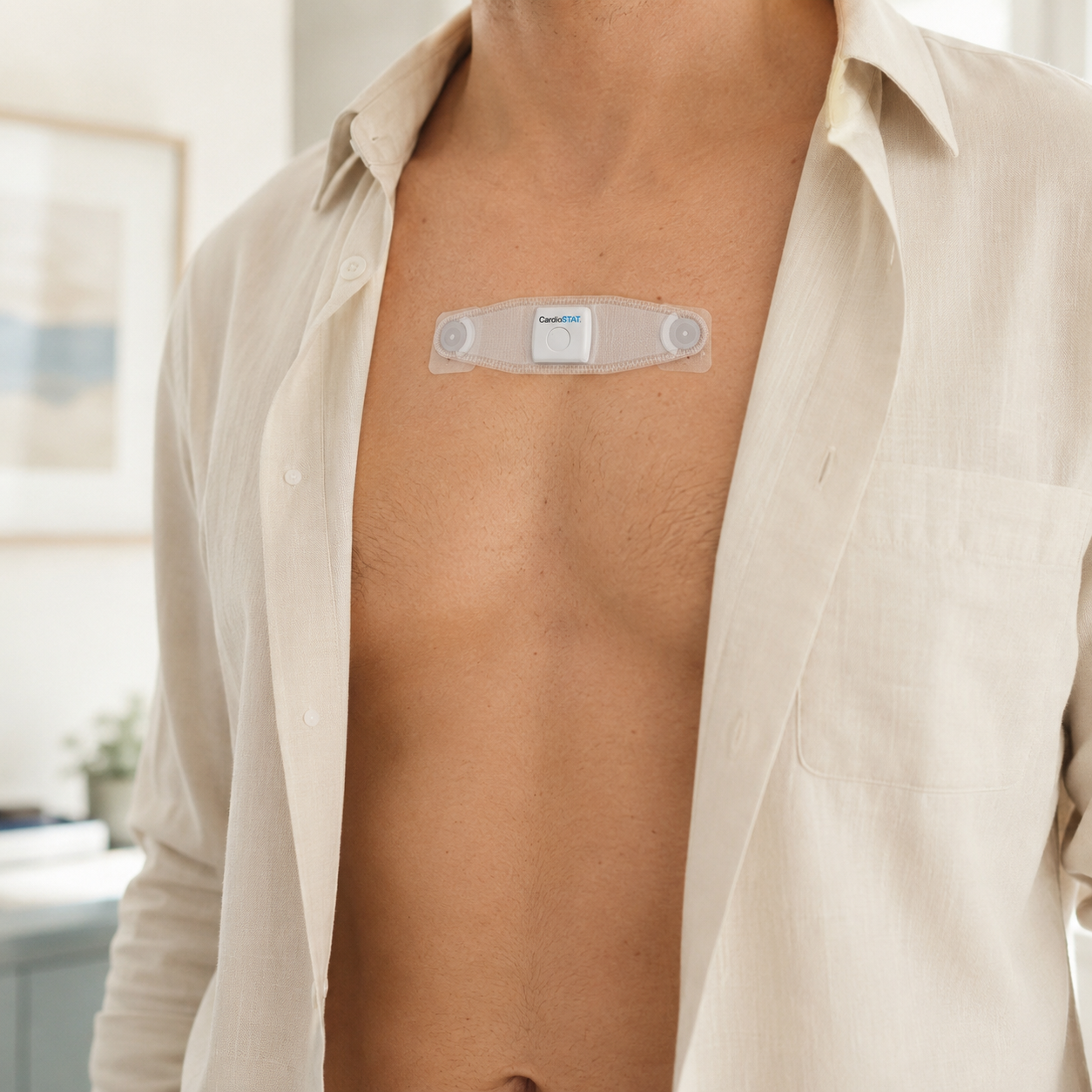
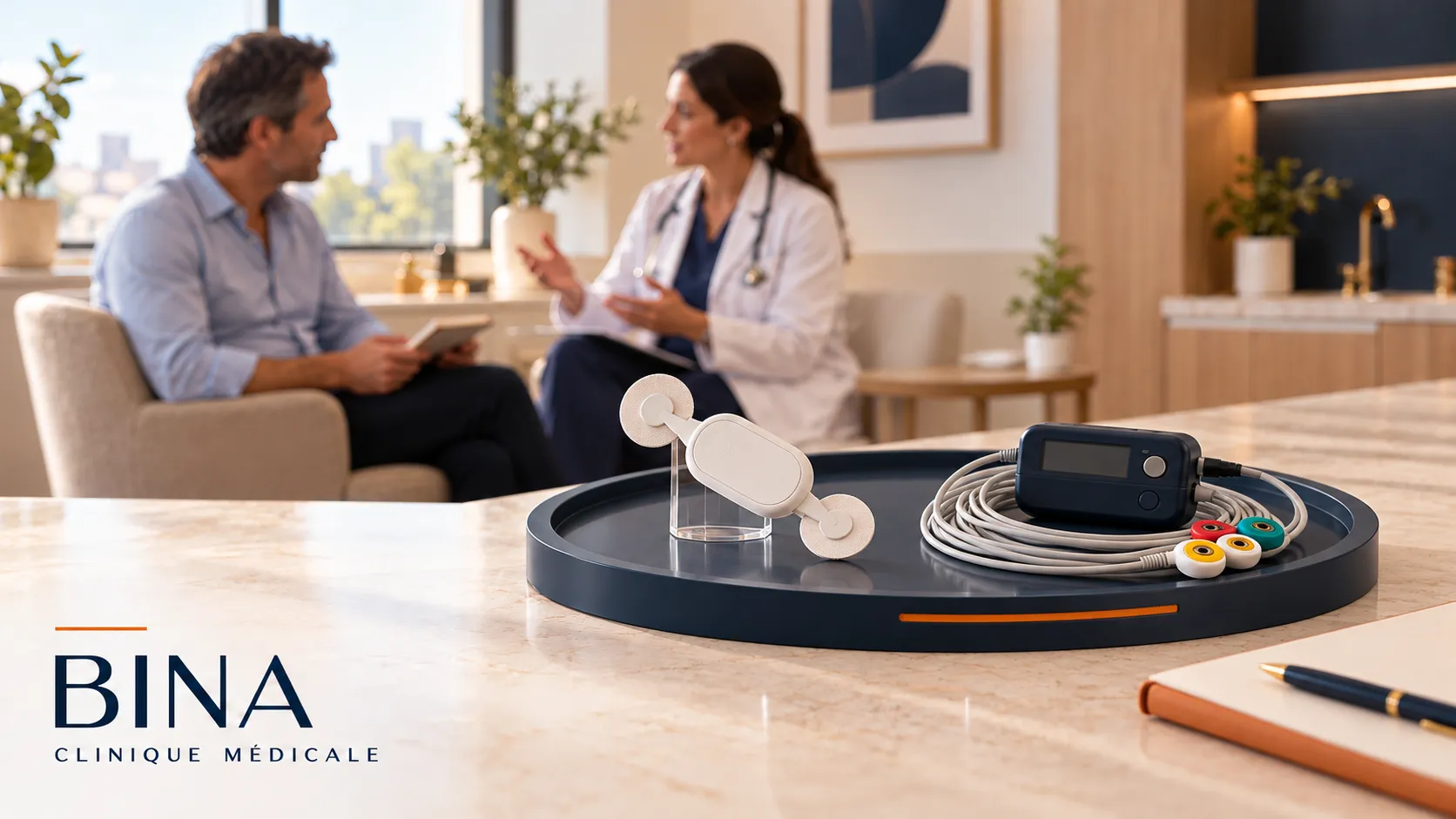
A traditional Holter setup usually connects chest electrodes by wires to a separate recorder. CardioSTAT uses a compact recorder attached to two electrodes on the chest.
Recording
Both traditional Holter monitors and CardioSTAT continuously record heart rhythm during the prescribed period.
Equipment
- Traditional Holter: Chest electrodes connected by wires to a separate recorder.
- CardioSTAT: A compact recorder attached to two chest electrodes.
Duration
- Traditional Holter: Often 24–48 hours; some services offer longer recordings.
- CardioSTAT: Can be prescribed for periods ranging from 48 hours to 14 days.
Showering
- Traditional Holter: Many devices must remain dry. Instructions depend on the model.
- CardioSTAT: Showering is permitted with precautions. The device must not be immersed.
Daily routine
Both types are generally worn during normal activities and sleep, following the instructions provided by your healthcare team.
These differences affect the wearing experience. Your clinician still needs to select the equipment and duration appropriate for the investigation.
How long will you need to wear the monitor?
The recording period should match your prescription.
A shorter recording may provide useful information when an event occurs during that period. When symptoms are intermittent, a clinician may request longer monitoring to allow more time to collect information.
A longer recording does not guarantee that a particular episode will happen or that a diagnosis will be established. If the initial test does not explain your symptoms, your clinician may recommend further assessment or another form of monitoring.
Before your appointment, confirm:
- Which device has been prescribed.
- How long you should wear it.
- When and how to return it.
- Who will discuss the results with you.
How should you prepare for your appointment?
A little preparation helps the electrodes attach securely and makes fitting easier.
- Bring your prescription and an updated medication list.
- Avoid applying lotion or cream to your chest.
- Wear a shirt that allows easy access to the area where the recorder will be fitted.
- Tell the team about previous reactions to medical adhesives.
During fitting, staff prepare the skin and attach the electrodes. This may include cleaning the area and removing a small amount of chest hair to improve contact.
You will receive instructions about wearing the recorder, keeping a symptom diary and removing or returning the equipment. Ask for clarification before leaving if any step is unclear.
Can you shower, exercise and sleep with CardioSTAT?
CardioSTAT is designed to stay in place during everyday activities and sleep. Follow any activity restrictions your clinician gives you.
Showering is allowed, but immersion is not.
Avoid baths, swimming pools and hot tubs while wearing the recorder. Keep it out of the direct shower spray, avoid very hot or prolonged showers, and do not rub it with a towel.
Normal activity is generally possible, but avoid excessive sweating. A close-fitting T-shirt at night can help reduce accidental disconnection.
Contact the fitting team if the adhesive becomes uncomfortable or the recorder loosens. For significant, persistent itching or irritation, follow the manufacturer’s removal instructions and seek advice from your healthcare team.
What should you do when you feel symptoms?
For CardioSTAT, press the centre button once when symptoms begin. This marks the episode without stopping the continuous recording.
Use the diary provided to record:
- The time.
- What you felt.
- How long it lasted.
- What you were doing.
These details help the interpreting team compare your experience with the recorded rhythm. Return the diary even if you did not experience symptoms.
The button does not summon medical help. Bina’s CardioSTAT service is not monitored in real time, so do not rely on it to alert someone during an emergency.
What happens after you return the monitor?
After the recording period, return the recorder and requested documents according to the instructions provided.
The recording is processed and analyzed. The results are then communicated to the prescribing healthcare professional, who explains what they mean for your care.
Before finishing the test, ask who will contact you, when results are expected and whom to call if you have not heard back.
A recording without an identified rhythm problem does not necessarily explain ongoing symptoms. If symptoms continue, discuss them with your clinician; further monitoring or assessment may be appropriate.
Do you need a prescription, and what does it cost?
Bina requires a valid medical prescription. If your request says “Holter” without specifying CardioSTAT or the duration, contact the clinic before booking.
The published fees, checked October 28, 2026, are:
- CardioSTAT, 48 hours: $349 CAD
- CardioSTAT, seven days: $449 CAD
- CardioSTAT, 14 days: $549 CAD. Confirm availability and arrangements before booking.
Cardiologist interpretation and report transmission are included in the 48-hour and seven-day services. A consultation to discuss your care with a Bina physician is separate and may involve additional fees.
The service includes fitting, wearing and return instructions, analysis and reporting. A cardiologist appointment is not included.
Private insurance may reimburse an ambulatory ECG test, depending on your plan. Confirm eligibility and required documentation with your insurer before booking.
When should you seek emergency care?
Call 911 immediately for signs of a heart attack, such as chest pressure or discomfort, especially with shortness of breath, sweating, nausea or discomfort in the arms, jaw or back.
Sudden collapse, unresponsiveness or abnormal breathing also requires immediate emergency help.
Do not wait for a monitoring appointment or test report when symptoms may be life-threatening.
Talk with us
Have a prescription for heart rhythm monitoring? Bina Medical Clinic in Brossard can confirm the appointment and duration that match your request.
View CardioSTAT monitoring options, or call 514-307-0111.
Official sources
- Heart & Stroke: Holter or event monitoring
- University of Ottawa Heart Institute: Ambulatory electrocardiogram
- CHU de Québec–Université Laval: CardioSTAT
- CardioSTAT: Patient information
- CardioSTAT: Device instructions and frequently asked questions
- Mayo Clinic: Holter monitor
- Heart & Stroke: Emergency signs
- Bina Medical Clinic: Holter monitoring
This article provides general information and does not replace an individual medical assessment, diagnosis or treatment.